Basic Idea About Agarwood
From living tree to liquid gold — the complete cultivated agarwood production journey.
Nature's Most Precious Resin
When agarwood trees (Aquilaria) are damaged — naturally or artificially — fungus enters the heartwood. The tree responds by producing a dark, aromatic resin that embeds into the wood. This resin-saturated heartwood is what we call Agarwood — one of the most valuable natural materials on Earth.


Cultivated Agarwood
Production Process
12 precise steps — from identifying the right tree to the finished, packed agarwood product ready for global markets.

Tree Reaches Optimal Size
Agarwood trees can be stressed for resin production once their BHD (Base Height Diameter) reaches 4 inches. At this stage the heartwood is mature enough to respond to inoculation and produce rich, resin-embedded wood. This is the critical starting point of the entire cultivation process.

Drilling with Electric Hand Drill
Precise holes are drilled into the trunk using an electric hand drill. These wounds simulate natural damage and create entry points for the inoculant. The pattern and depth of drilling directly influences the spread and quality of resin formation inside the heartwood.

Apply Fungal Inoculant to the Tree
A scientifically formulated fungal inoculant is applied into each drilled hole. This triggers the tree's natural defense mechanism — producing the dark aromatic resin (agarwood) in response. The type of inoculant and application method are closely guarded proprietary techniques that determine final quality.

Agarwood Formation Checking
Before any tree is felled, a careful check with a parang (machete) is performed to assess the extent and quality of resin formation inside. A minimum of 1–2 years is recommended after inoculation before harvesting — but longer wait times consistently yield superior quality and higher grades of agarwood.
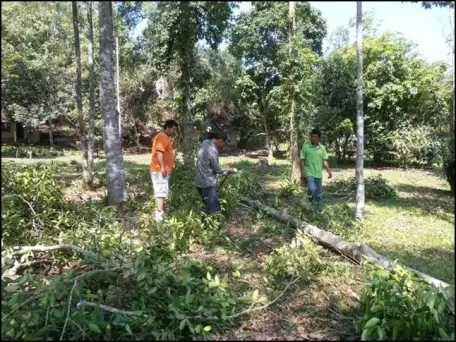
Felling the Gaharu Tree
Once quality is confirmed, the mature Aquilaria (Gaharu) tree is carefully felled. Precision in this step is important to preserve the maximum amount of resin-embedded heartwood. Every portion of the tree — trunk, branches, and roots — is evaluated for agarwood content before further processing begins.

Cut Trunk into Manageable Logs
The felled trunk is cut into smaller, manageable log sections on-site. This makes transportation and further processing significantly easier. Each log section is marked and tracked to maintain full traceability — a key quality assurance step in OnePlant's certified production chain.

Agarwood Logs Collected from Farm
Logs from across the cultivated plantation are gathered and collected at a central point on the farm. This aggregation step allows for initial quality sorting before any logs leave the plantation site. Detailed batch records are maintained at this stage — an essential part of OnePlant's CITES-compliant documentation.

Logs Transported to Processing Plant
The collected agarwood logs are loaded onto trucks for transport to the central processing facility. All transport is conducted under proper CITES permit documentation. The supply chain is fully monitored to ensure no wild-sourced material is mixed with plantation-grown agarwood.


Delivered to Processing Plant
Logs arrive at the processing facility where they are weighed, documented, and sorted by size and grade. The plant operates under strict quality control standards with each incoming batch assigned a unique tracking code. This is where raw plantation timber begins its transformation into the world's most prized aromatic material.

Remove the White & Yellowish Wood
Skilled workers carefully strip away the white and yellowish sapwood portions that contain no resin — leaving only the dark, resin-saturated heartwood. This rough processing stage is labor-intensive but critical: it determines the purity and grade of the final agarwood product. Higher resin content = higher grade = higher price.
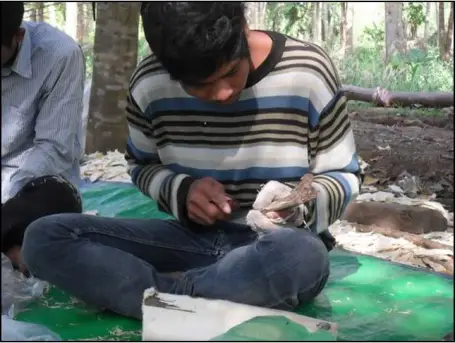

Final Carving by Expert Artisans
Experienced artisans perform the final carving to shape the agarwood into its finished form — whether chips, beads, sculptures, or incense material. This step requires deep expertise: the carver must read the grain and resin patterns of each piece to maximise both aesthetic beauty and aromatic value. This is where raw material becomes a finished luxury product.

Packing & Ready for Market
The finished agarwood products are carefully packed with full quality certification, CITES documentation, and OnePlant's unique batch tracking number. Each package is sealed and ready for delivery to global markets — from Dubai and Riyadh to Tokyo and Singapore. From tree to package: pure, certified, sustainable agarwood.
"Every gram of agarwood contains years of patience, the wisdom of nature, and the skill of human hands — all transformed into liquid gold."